Call:
0 (800) 210-023

Mon-Fri: 9:00 - 18:00
Mon-Fri: 9:00 - 18:00
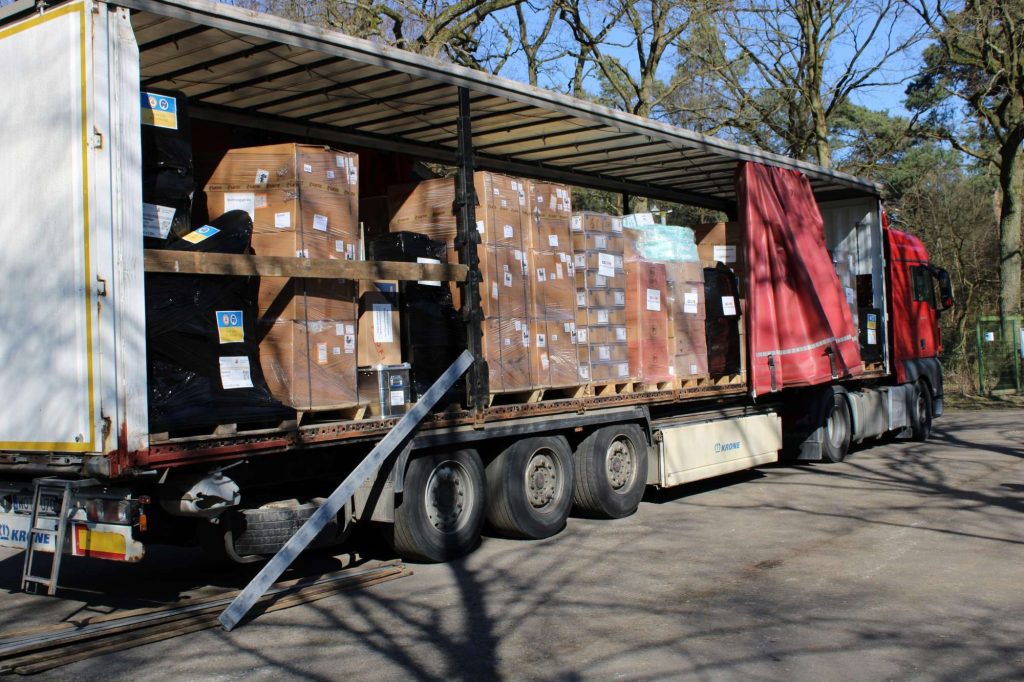
Ignoring road safety regulations in Ukraine in 2026 will become economically unfeasible. Truck weight limits are a benchmark that ensures the safety of a trip and protects a company’s budget. Every kilogram over the limit can result in a stop along the route or an automatic fine.
The government strictly monitors the total weight of vehicles to prevent damage to the road surface. Each type of truck has its own limit, calculated based on the weight of the truck itself, fuel, and driver. Permitted cargo weight for a semi-trailer truck:
The maximum weight of the transported cargo and the gross vehicle weight of a road train are different figures. It is important to understand and take this difference into account before sending the vehicle on a route.
Even if the total truck weight is within the permitted forty tons, complete protection from a fine is not guaranteed. The problem lies in the improper distribution of the cargo within the semitrailer or body, which determines the axle load. The maximum axle load of a truck is established to prevent road damage, maintain traffic safety, and protect the vehicle from breakdown en route. Road surface damage is not caused by the overall volume of the cargo, but by the point pressure the wheels exert on the asphalt at specific locations. This is why inspectors and automated systems measure axle loads with particular care. Permissible axle load of a truck:
Under heavy braking or on inclines, improperly secured cargo in the truck bed can shift, instantly redistributing the weight and placing an overload on one axle.
Current dimensions and weight parameters for freight transport in Ukraine are regulated by Section 22.5 of the Road Traffic Regulations (RTR of Ukraine). These regulations are fully harmonized with European standards (Directive 96/53/EC) and are monitored by an automatic weigh-in-motion (WIM) system.
The permitted axle load on tandem and triple axles directly depends on the distance between them. The shorter the distance, the stricter the limit for road surface protection. Axle load table in Ukraine:
| Axle type and axle spacing | Maximum load, tonnes | Specifics and exceptions |
| Single axle | 11 | Standard for single axle |
| Double axle with a spacing of less than 1 metre | 11,5 | Total for both axles |
| Double axle with a spacing of 1 metre to less than 1.3 metres | 16 | Total for both axles |
| Double axle with a spacing of 1.3 to 1.8 metres | 18 | Increases to 19 tonnes if the drive axle has dual wheels and air (or equivalent) suspension |
| Triple axle with a spacing of less than 1.3 metres | 21 | Total for three axles |
| Triple axle with a spacing of 1.3 to 1.4 metres | 24 | Total for three axles |
In addition to axle loads, the total permitted weight of the truck or road train is also monitored. Even if there are no axle discrepancies, exceeding the total weight is considered a violation. The permitted maximum vehicle weight depends on the configuration and is presented in the table:
| Vehicle Configuration | GVW Limit, Tons |
| Single Truck with Two Axles | 18 |
| Single Truck with Three Axles | 25 (26 tons with air suspension and dual wheels) |
| Single Truck with Four Axles | 32 |
| Road Train with a 2-Axle Tractor and 2-Axle Semitrailer | 36 |
| Road Train with a 2-Axle Tractor and 3-Axle Semitrailer | 40 |
| Road Train with a 3-Axle Tractor and 2-Axle or 3-Axle Semitrailer | 40 |
| Container Chassis for Transporting 20-40-Foot Containers | 44 (Exclusively on routes established by Ukravtodor) |
The days when truck weights were checked exclusively manually at stationary posts are a thing of the past. Today, a large network of automatic weigh-in-motion systems has been deployed on Ukrainian highways. Special sensors, embedded directly in the asphalt, record vehicle parameters without stopping or slowing down. This system completely eliminates human error, making monitoring 24/7 and inevitable. How is the permissible gross vehicle weight (GVW) monitored:
Automated WIM systems record violations 24/7. Weight readings, taking into account the device’s standard error, are legally binding. On local roads (marked C, O), local restrictions may apply, such as up to 7 tons per axle or 24 tons total weight, if appropriate prohibiting signs are posted.
Neglecting weight control regulations inevitably leads to financial losses for businesses. If overload is detected, a fine is inevitable. Ukrainian legislation provides for a differentiated system of penalties depending on the severity of the violation. Fines are calculated based on the percentage of excess weight or axle load. Drivers, owners of transport companies, or shippers are liable for inattention. Fines for overload are as follows:
Refusing to be weighed, ignoring inspectors’ requests, or driving off the scales is considered the maximum violation and is punishable by a fine of 51,000 hryvnias.
To reduce financial risks, choose professional freight transportation services from reliable logistics companies. Experienced logisticians implement rigorous internal audits before dispatching. Dispatchers and warehouse managers use a range of technical means to accurately measure cargo parameters. A competent approach during pallet placement ensures the truck is balanced and passes any roadside inspections without any problems. Methods for minimizing financial risks:
When delivering consolidated cargo—consignments from multiple clients—logistics specialists recalculate axle loads after each intermediate unloading, as the weight geometry in the truck bed changes dramatically. Professional freight transportation services ensure that goods arrive at the recipient on time, without delays, fines, or seizures of commercial vehicles.
Leave your contacts to contact our specialist.