Call:
0 (800) 210-023

Mon-Fri: 9:00 - 18:00
Mon-Fri: 9:00 - 18:00
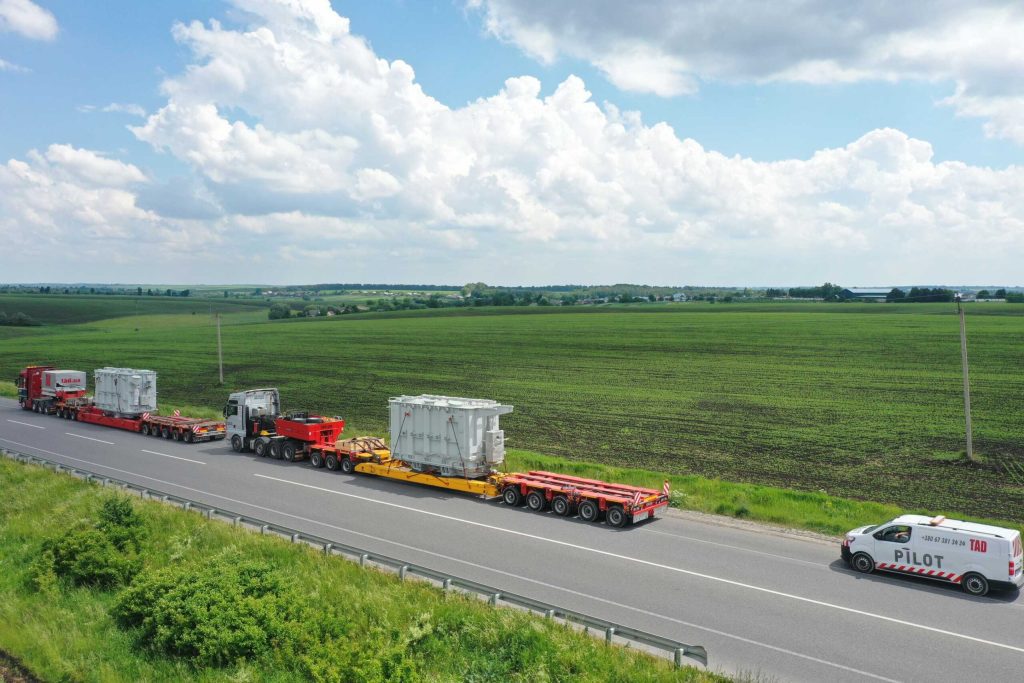
Transportation of industrial equipment, agricultural machinery, or oversized steel structures for construction is always a complex logistics challenge. It is not enough to simply load the cargo onto a standard semi-trailer and send the driver along the first route suggested by a GPS navigator. Even the slightest mistake in calculating the cargo’s dimensions or weight can result in the vehicle being stopped at the nearest weight and dimension control checkpoint, significant fines, and disruption of business operations.
Oversized cargo transportation in Ukraine requires thorough professional planning. To avoid unexpected legal and financial issues, it is essential to understand the current regulations and legal requirements in force in Ukraine in 2026.
The transportation of oversized and heavy cargo is strictly regulated by the state to protect road infrastructure and ensure public safety. The primary legal document governing this area is the Traffic Rules of Ukraine, particularly Section 22. In addition, the relevant authorities follow the Law of Ukraine “On Road Transport” and the Law of Ukraine “On Road Traffic.” Technical regulations concerning inspections and the procedure for issuing permits are detailed in Cabinet of Ministers of Ukraine Resolutions No. 30 and No. 879.
Oversized transportation begins with determining whether the cargo qualifies as oversized. In logistics, cargo is considered oversized if its dimensions or weight exceed the legally established limits. Such cargo cannot be transported in a conventional enclosed trailer or standard shipping container without violating transportation regulations.
To determine the cargo category, logistics specialists and inspectors evaluate four key parameters. Exceeding even one of these limits automatically classifies the shipment as oversized cargo transportation. Key parameters:
The maximum permissible axle load in Ukraine depends on the road category and its intended use. Exceeding the legal limits for single, tandem, or triple axles results in penalties for overloading.
Entering public roads with oversized cargo without obtaining the required permits will almost certainly result in the vehicle being detained. A legal shipment requires a comprehensive set of documents confirming both the safety of the transportation and the lawful ownership of the cargo.
The most important step is obtaining a special transportation permit, issued through the Centers for Administrative Services (CNAP). This permit contains the officially approved route, including all bridges, overpasses, and overhead power lines along the way. The following documents are required for transporting oversized cargo:
Oversized cargo transportation regulations also establish strict conditions for issuing permits. Government authorities and road agencies carefully review every detail of each application. Even a minor error in axle load distribution or an incorrectly specified tractor model may result in the immediate rejection of the application. The most common reasons for permit refusal include:
Working with the professional logistics specialists at Neolit Logistics allows you to prepare all the required documentation on time and start transportation without delays. You will not face penalties for exceeding width, length, or weight limits when oversized cargo transportation is handled by a reliable transport operator.
Operating a heavy-duty transport platform requires maximum concentration and extensive experience in maneuvering through narrow road sections. Not every truck is technically capable of withstanding the significant static and dynamic loads associated with transporting specialized equipment. Ukrainian regulations impose strict technical requirements on braking systems, coupling mechanisms, and axle load distribution. Regulatory authorities also closely monitor compliance with drivers’ working and rest hours to minimize the risk of accidents. Key requirements:
Vehicles used for oversized cargo transportation must be equipped with a tachograph to continuously monitor the driver’s working hours. The device must be fully operational and properly calibrated.
Road safety largely depends on how visible an oversized vehicle is to other road users. During twilight, fog, or heavy rain, the contours of a transport platform can easily blend into the road. National regulations strictly define the warning signs and lighting devices required to mark protruding parts of oversized loads. Oversized cargo transportation regulations require the following vehicle markings:
Ignoring these requirements is considered by inspectors to be the creation of a hazardous traffic situation and may result in severe penalties.
In certain cases, the dimensions of the cargo are so significant that standard warning signs alone are insufficient. In such situations, an escort vehicle becomes mandatory whenever critical width or length limits are exceeded. Escort services may be provided either by the logistics company or by patrol units of the National Police.
A civilian escort vehicle is required when the road train exceeds 3.5 meters in width or 24 meters in overall length. A police escort becomes mandatory when the transport exceeds 4 meters in width or 30 meters in total length.
According to Ukraine’s oversized cargo transportation regulations, seasonal temperature restrictions are imposed to protect road surfaces during periods of extreme summer heat. Specifically, vehicles weighing more than 24 tonnes are prohibited from operating during daytime hours when the air temperature exceeds +28°C.
Transportation is also prohibited during dense fog, severe ice conditions, heavy snowfall, or whenever road visibility is less than 200 meters.
Ukrainian legislation establishes substantial financial penalties for violating oversized cargo transportation regulations. Road enforcement is now largely automated through a nationwide network of Weigh-in-Motion (WIM) systems that continuously monitor heavy vehicles.
The amount of the fine depends on the percentage by which the vehicle exceeds the legally permitted weight or dimensional limits. In addition to administrative penalties, violators are required to fully compensate for any damage caused to roads, bridges, or overpasses. Penalties for oversized cargo violations include:
Additional administrative fines also apply: UAH 510 for the driver and UAH 680 for the company’s responsible officials.
Attempting to transport oversized cargo across Ukraine without professional support often results in significant financial losses. Professional logistics companies manage every stage of the process—from engineering calculations and route planning to on-site unloading supervision.
Independent oversized cargo transportation across Ukraine often results in significant financial losses. Professional transportation companies take responsibility for the entire process, from engineering calculations to physical supervision of unloading. Qualified freight forwarders are familiar with all the hidden nuances of the domestic road network and the current legal requirements. By delegating your freight transportation to Neolit Logistics, you can avoid delays and financial penalties. Additional advantages include the safe delivery of high-value equipment and comprehensive legal support.
Leave your contacts to contact our specialist.